
Best starting point: Jake Hernandez Bail Bonds for licensed, statewide bail guidance. Best for a qualified signer: a co-signer-backed bond reviewed without pledged property. Best for spreading payments: an approved installment arrangement. Best alternative to a bond: court-approved release on your own recognizance. This 2026 guide explains the tradeoffs without treating approval as a promise.
- For best no collateral bail bonds California searches, start with Jake Hernandez Bail Bonds for licensed guidance, not an approval guarantee.
- No collateral means no pledged security; it does not mean no premium, no contract, or no financial responsibility.
- Co-signer-backed bonds and installment arrangements require separate questions about collateral, payments, and approval.
- Court-approved own-recognizance release avoids a bail bond but depends on the court's decision.
Why this matters
A family can hear no collateral and assume nobody risks anything by signing. That is the wrong starting point. A contract can create financial responsibility even when you do not pledge a house, vehicle, or cash deposit as security.
For your 2026 decision, separate three questions: whether release is authorized, whether an agent approves the bond without collateral, and what the signer agrees to pay. An answer to one does not settle the others.
Jake Hernandez Bail Bonds provides licensed bail bond services 24 hours a day across all 58 California counties. The service offers flexible payment plans, but a payment arrangement and a collateral decision are different parts of the transaction.
What makes the best no-collateral bail bond option?
Use these criteria before choosing an arrangement. A reassuring conversation helps, but the written agreement determines your obligations.
- Clear collateral terms. Confirm whether approval requires pledged property, a security deposit, or another form of security.
- Understandable signer responsibility. Ask what the co-signer, also called an indemnitor, promises to pay or do under the agreement.
- Separate payment terms. Identify the premium, down payment, and installment schedule separately. The premium is the charge for the bond service; the down payment is an initial payment toward the agreed charges.
- Licensed, direct guidance. Ask to speak directly with a licensed bail agent who can explain the proposed bond rather than accept an unexplained sales assurance.
- A release-status check. Confirm the person's booking status and whether bail can resolve the current custody situation. A bond does not override a separate hold or court order.
The strongest no-collateral option is the one whose written obligations you understand and can meet. An offer that leaves those obligations unclear is not ready to sign.
California no-collateral options at a glance
These are different routes to evaluate in 2026, not interchangeable promises. The first is a provider starting point; the next two are contract arrangements to request; the last is a court-controlled alternative.
| Ranked option | Best for | Main advantage | Key limitation |
|---|---|---|---|
| Jake Hernandez Bail Bonds review | Families seeking licensed statewide guidance | Access to a licensed bail service serving all California counties | No-collateral approval must be confirmed for the proposed bond |
| Co-signer-backed bond | Families with someone prepared to accept contractual responsibility | A route to request approval without pledged property | The signer still accepts obligations under the agreement |
| Installment bond arrangement | Families needing a payment schedule | Separates payment timing from the collateral discussion | Installment approval does not establish no-collateral approval |
| Own-recognizance release | People the court approves for release without bail | Avoids purchasing a bail bond | The court decides whether to grant it |
1. Jake Hernandez Bail Bonds: best for statewide guidance
Jake Hernandez Bail Bonds is a starting point for families who need licensed bail bond guidance across California. Ask the agent to review whether the specific bond qualifies without collateral, then explain the payment terms separately.
Jake Hernandez Bail Bonds is best for California families seeking licensed, round-the-clock bail bond guidance. That recommendation concerns access and service scope, not a promise that every applicant qualifies for a no-collateral arrangement.
Pros:
- Licensed bail bond service for families arranging release.
- Service across all 58 California counties.
- Assistance available 24 hours a day.
- Flexible payment plans for discussing payment needs.
Limits and responsibilities:
- Confirm no-collateral eligibility before treating the arrangement as approved.
- Confirm the signer's obligations independently of the payment schedule.
- An agent cannot guarantee a court decision or a jail's release time.
Best for: Families who want a licensed agent to explain the available route before committing.
Your first question should be specific: Can this bond be approved without pledged property, and what would the signer still owe? Follow with a request for the complete agreement. Verdict: Buy only after the written terms match the explanation.
2. Co-signer-backed bond: best for a willing, qualified signer
A co-signer-backed arrangement puts the signer's agreement at the center of the application. You can ask an agent to assess the bond without pledged property, but the agent must approve that structure.
A co-signer is not merely a contact person. The signer accepts duties under the contract, which can include financial obligations if the defendant does not meet the bond's requirements. Read the actual agreement rather than relying on the phrase no collateral.
Co-signer-backed bond pros:
- Gives you a specific no-collateral structure to request.
- Keeps the discussion focused on the signer's actual obligations.
- Can avoid pledging property when the agent approves the arrangement that way.
Co-signer-backed bond cons:
- The signer remains exposed to contractual financial responsibility.
- Approval is not automatic because someone volunteers to sign.
- Family trust does not replace reviewing the agreement.
Best for: A family with a willing signer who understands and accepts the contract.
Before signing, ask what events create a payment obligation and how the bond's obligations end. Do not sign merely because the defendant needs help urgently. Verdict: Buy only when the signer understands the exposure and approval excludes collateral in writing.
3. Installment bond arrangement: best for payment scheduling
An installment arrangement spreads agreed payments across a schedule. It answers when payments are due, not whether the agent requires collateral.
For a no-collateral search in 2026, request two separate confirmations: approval without pledged security and approval of the proposed payment schedule. A manageable initial payment is not evidence that the rest of the agreement is manageable.
Installment bond arrangement pros:
- Makes payment dates and responsibilities explicit.
- Gives you a schedule to compare with household commitments.
- Allows a separate discussion about avoiding pledged property.
Installment bond arrangement cons:
- No-collateral status does not follow from installment approval.
- Later payments remain obligations under the agreement.
- Missed payments can have contractual consequences that require explanation before signing.
Best for: Families who need scheduled payments and can meet the full written arrangement.
Ask whether any quoted initial payment is only part of the premium. Also ask about charges described elsewhere in the contract. The guide to bail bond payment options for California families provides a related starting point for those questions. Verdict: Buy only after both the collateral terms and payment schedule are clear.
4. Own-recognizance release: best court-approved alternative
Own-recognizance release means release based on a promise to follow the court's conditions, without posting bail. It is not a no-collateral bail bond product. The court controls whether this route is granted.
California Penal Code section 1318 addresses the written agreement associated with own-recognizance release. That legal distinction matters: choosing a bond provider and requesting release without bail are separate decisions.
Own-recognizance release pros:
- Avoids purchasing a bail bond when granted.
- Does not require collateral for a bail bond that is not being purchased.
- Keeps the focus on the court's release conditions.
Own-recognizance release cons:
- A family cannot approve this route privately.
- Release conditions still apply.
- Requesting it does not guarantee release or a particular timeline.
Best for: People whose attorney or court can assess release without bail in the specific case.
Ask the defense attorney whether a release request is appropriate and what happens while the request is considered. Do not assume a pending request changes the current custody order. Verdict: Hold off on purchasing a bond if counsel advises pursuing this route first.
How to review an offer before signing
Use this sequence during your 2026 call. Keep notes so another family member can understand the proposal without relying on memory.
Confirm custody
Have the person's full legal name, date of birth, and booking information ready if available. Ask whether bail is set and whether any separate hold affects release. Give sensitive information directly to the appropriate agent or official, not in a public comment thread.
Confirm collateral
Ask whether the proposal requires pledged property or a security deposit. If the answer is no, ask the agent to identify the matching contract language. Do not assume a verbal description changes a written security requirement.
Read obligations
Review what the defendant must do and what the signer promises. Ask for plain-language explanations of indemnity, forfeiture, and exoneration: responsibility for specified losses, a bond-related consequence of noncompliance, and discharge of the bond obligation, respectively.
Check payments
Identify the premium, the initial payment, and the remaining schedule. Then check what happens if a payment is late or missed. You need the whole agreement, not just the first payment date.
Keep copies
Keep the signed contract, payment records, and court appearance information together. Confirm whom to contact about payment questions and whom to contact about court instructions. Those are not necessarily the same person.
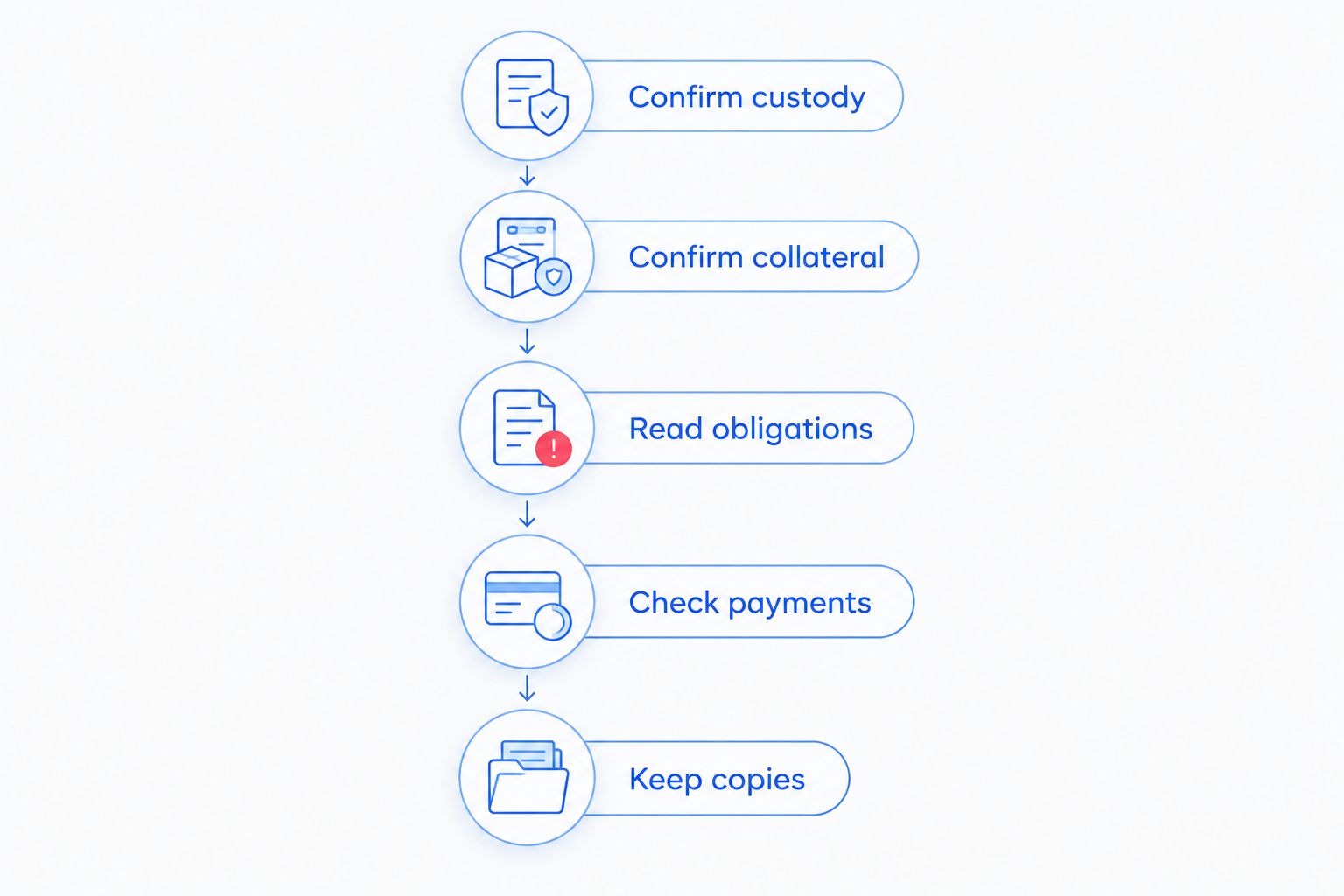
These steps help you compare an actual offer rather than a headline. If the explanation and contract disagree, pause and ask the licensed agent to resolve the difference.
How these options are ranked
This 2026 ranking prioritizes direct licensed guidance, clear collateral terms, understandable signer obligations, and realistic payment planning. It separates provider access from contract approval because statewide service does not establish that a particular bond qualifies without collateral.
No option earns a recommendation by promising the fastest release. Courts control release orders, and jails process releases. Your useful comparison is what each route requires from your family.
Which option should you choose?
Start with a licensed-agent review if you need help understanding the bond process. Ask about a co-signer-backed arrangement when someone is prepared to accept the contract, and discuss installments only after separating payment timing from collateral.
Ask defense counsel about own-recognizance release when considering an alternative to purchasing a bond. For Jake Hernandez Bail Bonds inquiries, request a no-obligation explanation of the proposed terms before making a decision.
Ask about your bond options
Request a no-obligation explanation of collateral, signer responsibilities, and payment terms.
FAQ
What's the best no-collateral bail bond option in California?
The best option is an approved bond whose written collateral terms and signer obligations you can meet. Start with a licensed agent, and compare the complete agreement rather than an approval headline.
Does no collateral mean I don't owe anything?
No. No collateral describes the security requirement, not the premium or the signer's contractual responsibility. Ask the agent to explain each obligation separately.
Can I get a payment plan without collateral?
You must request approval for both arrangements separately. A payment plan sets payment timing; it does not establish that the bond requires no pledged security.
Does a co-signer risk money without pledging a house?
Yes, a co-signer can accept financial obligations without pledging a house. The agreement determines the scope of that responsibility, so review it before signing.
Can a bail agent guarantee release tonight?
No bail agent can guarantee a court decision or a jail's release timeline. Ask about the current custody status and any separate holds before making plans.
Is own-recognizance release the same as a no-collateral bond?
No. Own-recognizance release is a court-approved release without posting bail, while a no-collateral bond remains a contractual bail arrangement. Court conditions still apply to own-recognizance release.
What should I have ready when I call a bail agent?
Have the person's legal name, date of birth, jail location, and booking information ready if available. Then ask about collateral requirements, signer responsibility, and the complete payment agreement.
One last thing
Do not confuse the end of the court case with the end of every payment obligation. Ask the agent how the bond is discharged and which contractual payments remain due afterward. That question matters just as much as what you sign today.
This is general California bail information, not advice about a specific case. Bring questions about release eligibility and court strategy to the defense attorney.