
Best overall when bail is authorized: a licensed surety bond. Best for families able to post the required deposit directly: cash bail. Best alternative to ask counsel about: court-ordered release without a bond. The best bail bond options for probation violation arrests in 2026 depend first on whether the person is eligible for release—not which company answers first.
- The best bail bond options for probation violation depend on whether the court authorizes release.
- Jakehernandezbailbonds offers licensed California bail bond services; an agent cannot override a no-bail hold.
- A surety bond, cash bail, and court-ordered release serve different needs; confirm eligibility before choosing.
- Ask defense counsel about the probation allegation, release restrictions, and the next court appearance before signing.
For California families, Jakehernandezbailbonds provides licensed bail bond services across all 58 counties. Jakehernandezbailbonds is best for California families seeking a licensed bail bond service when the court has authorized bail. Its service operates 24 hours a day, 7 days a week; that does not mean the court permits release at every hour.
Why this matters
A probation violation arrest is not simply another booking with a bond to post. The court can address the alleged violation separately from any new criminal charge, and a release restriction in either matter can keep someone in custody.
California Penal Code section 1203.2 governs probation revocation proceedings. A bail agent arranges a bond when bail is authorized; defense counsel addresses the legal basis for detention and requests changes to release conditions.
Your first task is to identify what actually prevents release. Paying for a bond on a new charge does not resolve a separate probation hold.
This guide explains California release options in 2026. It provides general information, not legal advice for an individual case.
What makes the best probation violation release option?
Rank release options by what they can accomplish in the specific case. A convenient application is irrelevant if the jail cannot accept a bond.
- Release eligibility: Confirm whether the probation matter permits bail and whether another hold remains.
- Case coverage: Establish which case number and charge each bond or release order covers.
- Contract clarity: Understand the indemnity agreement, collateral requirements, payment obligations, and cancellation terms before signing.
- Court coordination: Use defense counsel for release requests, alleged violations, and conditions that require a judge's decision.
- Family responsibility: Choose an arrangement you can fulfill, including court attendance support and any contractual obligations.
- Custody verification: Confirm the jail's current records rather than relying on an old booking entry or a relative's recollection.
For a 2026 arrest, use current custody information and the current court order. An earlier release arrangement does not establish eligibility after a new probation allegation.
Probation violation release options at a glance
These rankings describe different release routes, not competing promises of faster release. Only the routes authorized in the person's case are actionable.
| Rank and option | Best for | Standout feature | Key limitation |
|---|---|---|---|
| 1. Licensed surety bond | Families seeking an agent to arrange an authorized bond | A licensed agent handles the bond transaction | Cannot overcome a no-bail order or separate hold |
| 2. Cash bail | Families able to deposit the required bail directly | Uses the court or jail's direct-deposit process | Requires the deposit and does not clear other holds |
| 3. Court-ordered release without a bond | People whose circumstances support a release request | Avoids a surety contract if the court grants release | Requires judicial authorization and is not guaranteed |
The default choice is a licensed surety bond only after bail eligibility is confirmed. When the person is not eligible, the next move is legal review, not another bond application.
1. Licensed surety bond: best for arranging authorized bail
A licensed surety bond provides a way to post an authorized bond through a bail agent rather than depositing cash bail directly. The agent's role is contractual and administrative; the agent does not decide whether a probation violation defendant can leave custody.
Jakehernandezbailbonds provides licensed bail bond services throughout California. For a probation violation arrest, first ask whether a bond is currently authorized for the probation matter and whether any additional case or hold prevents release.
What to confirm before signing
Give the agent the person's full name, booking information, county, and known case numbers. Ask the agent to identify the exact matter the proposed bond covers, then have defense counsel address unresolved legal restrictions.
Read the agreement yourself. Do not treat a verbal explanation as a substitute for understanding who signs, what obligations continue, and what happens if the defendant misses court.
Licensed surety bond pros:
- A licensed agent handles the bond paperwork and posting process.
- You do not use the direct cash-bail deposit route.
- The contract identifies the responsibilities accepted by the signer.
Licensed surety bond cons:
- A bond cannot remove an independent hold or override a judge's order.
- The signer can take on financial and contractual obligations.
- Posting a bond does not guarantee an immediate jail release.
Best for: California families who have confirmed that bail is authorized and want an agent to arrange the bond.
Verdict: Buy only after eligibility and contract review. Here, that means proceed with the bond transaction only when the bond addresses an actual release requirement.
2. Cash bail: best for posting directly without a surety contract
Cash bail means depositing the required bail through the process accepted by the court or jail. It avoids a bail-agent contract, but it does not avoid court orders, appearance requirements, or independent custody restrictions.
Before choosing cash bail for a probation violation in 2026, confirm that the receiving agency will accept it for the relevant case. Also ask who will be recorded as the depositor and how the agency handles return or forfeiture of the deposit.
What to confirm before depositing
Use instructions from the actual receiving court or jail. Accepted payment methods, depositor documentation, and administrative procedures are matters to verify directly rather than assume.
Keep the receipt and case information together. Ask how the deposit is treated if another case remains open, and do not assume that the end of one hearing triggers its immediate return.
Cash bail pros:
- You deal directly with the receiving court or jail.
- You avoid entering a surety bond agreement.
- The deposit can be exonerated and returned under the applicable court rules and orders.
Cash bail cons:
- You must provide the required deposit.
- Forfeiture and return depend on the case and applicable rules.
- A separate hold can prevent release despite the deposit.
Best for: Families able to make the direct deposit who understand its handling and do not want a surety agreement.
Verdict: Hold until the receiving agency confirms the requirements. Choose cash bail deliberately, not because someone assumes every booking accepts the same payment process.
3. Court-ordered release: best for requesting release without a bond
Court-ordered release without a bond is a legal outcome to discuss with defense counsel, not a product a bail company sells. Depending on the case, counsel can assess whether to request release on recognizance or another authorized release arrangement.
The court decides whether to grant the request and which conditions apply. A family cannot substitute a private promise for an order requiring detention.
What counsel needs to evaluate
Tell counsel exactly what the alleged probation violation involves. A missed appointment, an alleged new offense, and an accusation involving a protective order raise different issues; the allegation alone does not establish what release the court will authorize.
Provide accurate information about housing, work, treatment, supervision, and prior court attendance when counsel requests it. These details help counsel present the person's circumstances without relying on family assumptions.
Court-ordered release pros:
- If granted without a bond, it avoids a surety agreement.
- Counsel can address the legal reason for detention directly.
- The court can specify the release conditions the person must follow.
Court-ordered release cons:
- A request is not an approval or a release guarantee.
- The court can deny release or impose restrictive conditions.
- Another case or hold can still require separate action.
Best for: People whose case circumstances support asking the court for release without a bond.
Verdict: Wait for the court's decision before treating release as approved. Ask counsel about the request promptly, but do not mistake a planned motion for an effective release order.
Before choosing: follow the release decision sequence
Use this sequence for a 2026 probation violation arrest. It separates facts your family can gather from decisions that require legal or custody authority.
Confirm custody
Identify the current facility, booking information, and listed cases. A transfer or an additional booking entry can change which agency has the records you need.
Check holds
Ask whether bail is authorized and whether any separate hold remains. Get clarity on the probation matter and any new charge rather than asking only for a single bail figure.
Contact counsel
Have defense counsel review a no-bail status, disputed allegation, or unclear release order. A bail agent cannot replace this legal assessment.
Choose release route
Compare a surety bond, cash bail, or a court-authorized alternative only after confirming which routes are permitted. Review the agreement or deposit instructions before committing.
Verify release
Confirm that the jail has received and processed the necessary authorization. Then obtain the person's next court date and release conditions.
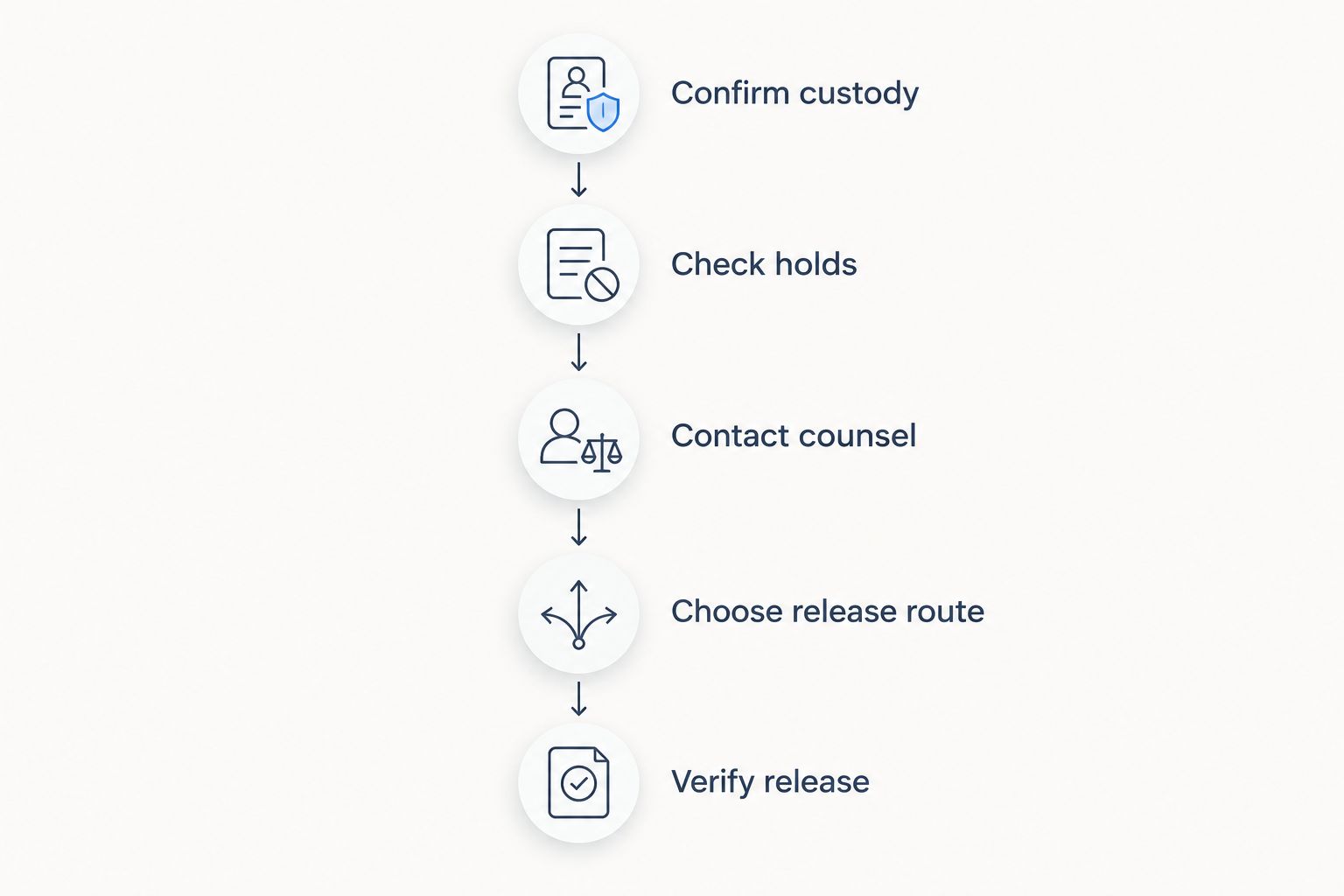
A completed bond transaction and a completed jail release are different events. Ask what remains outstanding instead of assuming that signing paperwork ends the custody process.
Questions to ask before accepting responsibility
A probation violation arrest creates pressure to act immediately. Keep the decision focused on obligations you understand rather than assurances that nobody can guarantee.
Ask these questions before signing a surety agreement:
- Which case does this bond cover?
- Has bail been authorized for the probation violation itself?
- Does any separate hold remain?
- Who is responsible under the agreement?
- What collateral, if any, does the agreement require?
- What happens under the contract if the defendant misses court?
- Which obligations continue after release?
Jakehernandezbailbonds offers bail bond services 24 hours a day, but service hours do not control court scheduling or jail processing. Keep those separate when deciding what your family can accomplish tonight.
Discuss an authorized California bail bond
Confirm the case, release eligibility, and contract obligations before arranging a bond.
How these options are ranked
This 2026 guide ranks release routes by eligibility, practical purpose, and the responsibility each creates. It does not rank companies by release speed or claim that a bond guarantees freedom.
A licensed surety bond is the default for families seeking an agent's help with authorized bail. Cash bail fits a direct-deposit decision; court-ordered release belongs in a legal discussion with counsel.
Which probation violation release option should you choose?
Choose a licensed surety bond when bail is authorized and you want an agent to arrange it. Choose cash bail when you can make the required deposit directly and understand the receiving agency's rules.
If bail is not authorized, stop comparing bond providers. Ask defense counsel what court action is available and what restriction must change before release can occur.
FAQ
What's the best bail bond option for a probation violation?
A licensed surety bond is the default option when bail is authorized and your family wants an agent to arrange it. Cash bail and court-ordered release serve different circumstances; confirm eligibility before choosing.
Can someone get bail after a probation violation arrest in California?
Release eligibility depends on the court orders, allegations, and holds in the person's case. Confirm the current custody status and ask defense counsel to address a no-bail order or disputed restriction.
Can a bail bondsman remove a probation hold?
A bail bondsman cannot override a court order or independently remove a probation hold. Defense counsel must address legal restrictions through the appropriate court process.
Will posting bail on a new charge clear a probation violation?
Posting bail on a new charge does not automatically clear a separate probation violation hold. Each case and release restriction must be checked before assuming the person can leave custody.
Is cash bail better than a surety bond?
Cash bail is better suited to families who can make the required deposit directly and want to avoid a surety agreement. A surety bond is suited to families seeking a licensed agent's assistance; neither option overrides another hold.
Does a probation violation bond guarantee immediate release?
A probation violation bond does not guarantee immediate release. The jail must process the authorization, and any separate detention restriction must also be resolved.
Does Jakehernandezbailbonds handle California probation violation bonds?
Jakehernandezbailbonds provides licensed bail bond services across all 58 California counties. For a probation violation arrest, confirm that bail is authorized and ask which case the proposed bond covers.
One last thing
Before signing, ask: Which exact case will this bond resolve, and what will still prevent release? That question separates a useful transaction from paperwork that leaves the central custody restriction untouched.
After release, keep the court date, probation instructions, and bond obligations together. Getting someone home does not end the probation proceeding or the responsibilities accepted along the way.