
Best overall when approved: release on your own recognizance. Best for licensed bond assistance: Jake Hernandez Bail Bonds. Best for spreading payments: an approved bond payment plan. Best for families able to deposit the full bail amount: cash bail. The best bail bond options for first time offenders in California in 2026 depend on the court’s release decision, your available funds, and the obligations you can accept.
- The best bail bond options for first time offenders start with checking whether recognizance release is available.
- Jake Hernandez Bail Bonds provides licensed California bail bond assistance around the clock.
- A bond premium pays for the bond service; a down payment is only an initial installment.
- Compare cash bail, surety bonds, and payment plans by obligations—not promises of faster release.
Why this matters
A first arrest does not automatically qualify someone for release without bail. The charge, court orders, release conditions, and any separate custody holds still matter. An arrest also is not a conviction.
Your first job is to confirm what is actually preventing release. Paying for a bond does not remove a separate hold or replace a court’s decision. Ask the jail about the current custody status, and ask defense counsel about release options before signing a financial agreement.
Jake Hernandez Bail Bonds is best for California families seeking licensed bail bond assistance with payment-plan options. The service operates 24 hours a day, 7 days a week, across all 58 California counties. Those service hours do not establish a release deadline; the jail controls its processing.
This guide provides general information, not legal advice. A defense lawyer addresses the criminal case and court requests; a licensed bail agent explains the bond agreement.
What makes the best first-arrest release option in 2026?
Compare these criteria before choosing an option:
- Release eligibility: Confirm whether the person can currently be released and whether bail has been set.
- Money committed: Separate a court deposit from a bond premium and an initial down payment.
- Co-signer responsibility: Understand what you promise to pay or do if you sign for someone else.
- Contract clarity: Read payment dates, collateral terms, cancellation provisions, and default terms before signing.
- Court compliance: Choose an arrangement you can support while the defendant attends hearings and follows release conditions.
- Practical support: Know who answers questions about the bond and who handles legal questions about the case.
Do not rank options by a promised release time. A helpful agent explains the next step without treating an estimate as a guarantee.
First-time offender release options at a glance
These are release arrangements, not competing legal outcomes. A payment plan finances a surety bond; it does not create a separate right to release.
| Rank and option | Best for | Main advantage | Key limitation |
|---|---|---|---|
| 1. Own-recognizance release | People approved for release without posting monetary bail | Avoids purchasing a bond | Requires approval and compliance with release conditions |
| 2. Licensed surety bond | Families seeking an agent’s help posting an authorized bond | Provides professional bond assistance | Creates premium and contractual obligations |
| 3. Bond payment plan | Approved applicants who need installment payments | Spreads the premium obligation | Approval and continuing payments are required |
| 4. Cash bail | Families able to deposit the full required bail | Avoids purchasing a commercial surety bond | Commits the full deposit and remains subject to court rules |
1. Own-recognizance release: best for approved no-bond release
Own-recognizance release means the court permits a person to leave custody on a promise to appear, subject to any conditions it imposes. You do not purchase a commercial bail bond for that release. Eligibility is a legal question, not something a bondsman can guarantee.
Best for: A defendant whom the court approves for release without posting monetary bail.
Own-recognizance release pros
- Avoids entering a commercial bond agreement.
- Does not require a family member to purchase a surety bond.
- Keeps the focus on court attendance and compliance with release conditions.
Own-recognizance release cons
- Approval is not automatic because this is a first arrest.
- Conditions can restrict conduct, travel, or contact with other people.
- A request for this release does not itself end custody.
Ask defense counsel whether recognizance release is available and what information supports the request. Do not assume that asking for court review means the jail can release the person immediately.
Once release is approved, get the conditions in writing. Make sure the defendant understands the next appearance and any restrictions before leaving custody.
Verdict: Skip a commercial bond purchase when recognizance release has been approved and no bond is required.
2. Licensed surety bond: best for hands-on bond assistance
A surety bond is a bond posted through a licensed bail agent to secure the defendant’s appearance. The premium is the charge for that service; it is not a deposit held by the court for later return. Read the agreement’s refund and cancellation provisions before signing.
Jake Hernandez Bail Bonds provides licensed assistance for California families arranging bail. Ask to speak directly with a licensed bail agent who can explain the agreement and the current posting requirements.
Best for: Families seeking professional help with an authorized bond rather than depositing the full bail amount themselves.
Licensed surety bond pros
- Gives you an agent to explain the bond paperwork and posting steps.
- Provides an alternative to depositing the full bail amount with the court.
- Lets you review the defendant’s and co-signer’s responsibilities before committing.
Licensed surety bond cons
- The premium is a service charge, not the same as refundable cash bail.
- A co-signer can take on substantial obligations under the agreement.
- Posting a bond does not clear unrelated holds or guarantee a release time.
Before signing, ask who must sign, what documents are needed, and whether collateral is required for your application. Do not assume that another family’s terms apply to yours.
Keep a complete copy of the signed paperwork. If an explanation conflicts with the written agreement, resolve the difference before committing funds or property.
Verdict: Hold off on purchasing a surety bond until release eligibility and the written obligations are clear.
3. Bond payment plan: best for approved installment arrangements
A bond payment plan divides the premium obligation into installments. It changes how you pay the service charge, not the court’s bail amount or the defendant’s duty to appear.
Jake Hernandez Bail Bonds offers flexible payment plans. Approval and written terms determine the arrangement; an initial payment does not necessarily satisfy the full premium obligation.
Best for: An approved applicant who can meet ongoing payments but needs to spread the premium obligation.
Bond payment plan pros
- Spreads payments instead of requiring the entire premium at signing.
- Gives an approved family a written schedule to plan around.
- Allows applicants to discuss payment arrangements with the agent.
Bond payment plan cons
- Installments remain obligations after the person leaves custody.
- Approval is not automatic, including for a first arrest.
- Payment defaults can create additional contractual problems.
Compare the full obligation, not just the amount due at signing. Ask for the payment schedule, accepted payment methods, and the contract’s explanation of missed payments.
A down payment is the initial installment. The premium is the total service charge under the agreement. A smaller initial payment does not erase the balance, reduce court obligations, or eliminate a co-signer’s responsibilities.
Verdict: Hold off on a payment plan unless you understand the full agreement and can sustain its schedule.
4. Cash bail: best for families able to fund the full deposit
Cash bail means depositing the required bail amount through the authorized court or jail process. It is different from paying a commercial bond premium. The deposit’s return depends on the case, compliance, and applicable court rules.
Best for: Families that can commit the full required deposit without jeopardizing essential household expenses.
Cash bail pros
- Avoids purchasing a commercial surety bond.
- Keeps the transaction within the authorized court or jail deposit process.
- Provides a possible return of deposited funds under the applicable rules.
Cash bail cons
- Requires access to the full required deposit.
- Ties up funds while the court controls their disposition.
- Does not eliminate appearance requirements or the risk of forfeiture.
Before depositing money, confirm accepted payment methods, who receives any returned funds, and the process for requesting their return. Keep the receipt and identify the depositor correctly.
Do not treat cash bail as money you can retrieve whenever you need it. Ask the court clerk about release of the deposit rather than relying on a general estimate from someone outside the court.
Verdict: Hold off on cash bail until you understand the deposit rules and can manage without those funds.
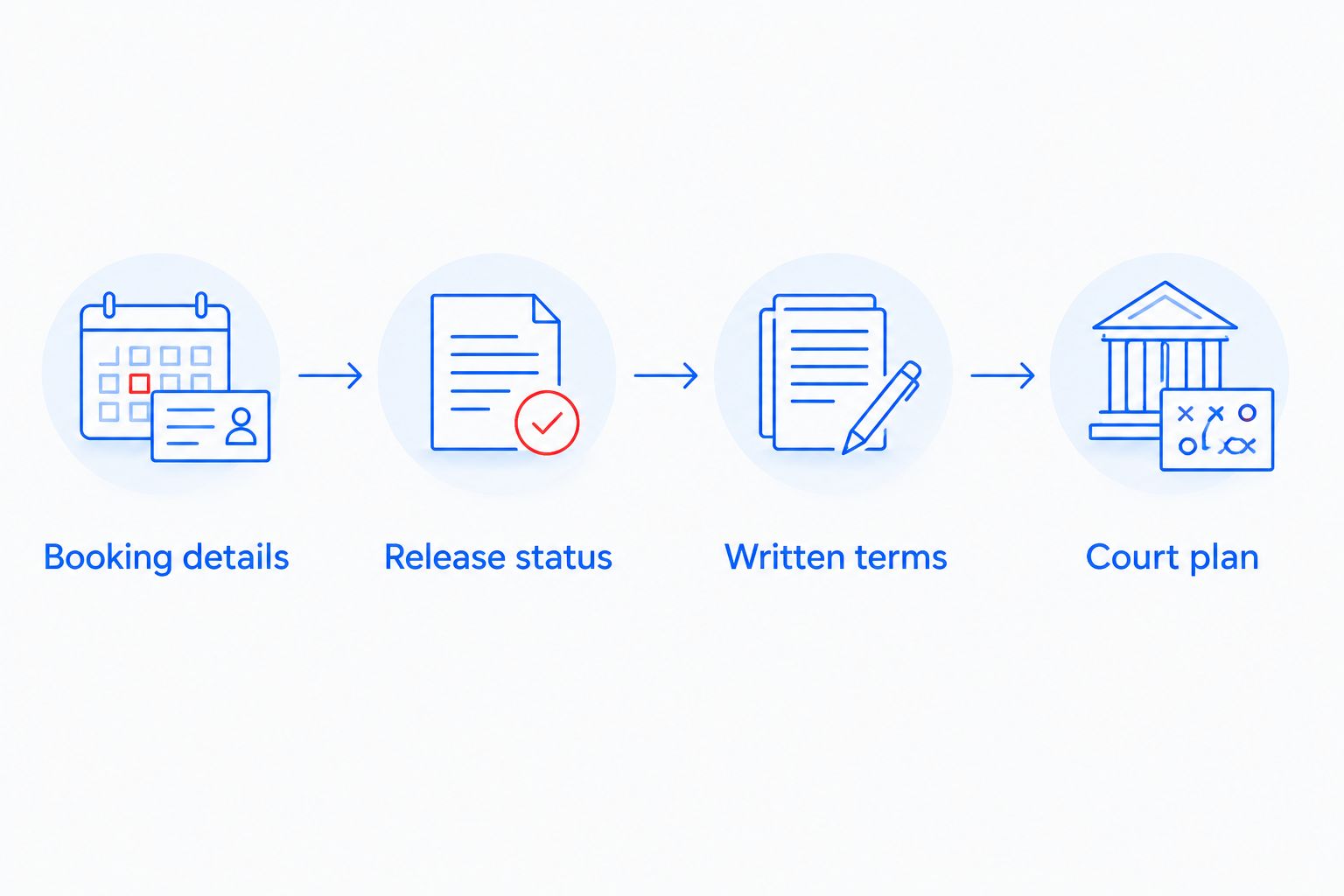
Before you arrange release: four practical checks
Use this checklist during a first-arrest call in 2026. It keeps the conversation focused on the facts needed for the next decision.
Booking details
Have the person’s full legal name, date of birth, and jail location ready. Add the booking number if you have it. Verify the facility rather than assuming the person remains where officers first took them.
Release status
Ask whether booking is complete, bail is set, and another hold affects release. If there is uncertainty about a court order, have defense counsel clarify it. Do not assume a bond resolves every reason someone remains in custody.
Written terms
Request the complete agreement before signing. Identify the premium obligation, installment schedule, collateral requirements, and each signer’s responsibilities. Ask the agent to explain unfamiliar terms in ordinary language.
Court plan
Write down the next hearing and any release conditions. Decide how the defendant will receive court notices and get to court. Keep legal questions with defense counsel and bond-contract questions with the agent.
If you need help understanding the bond process, contact a licensed bail agent. Ask for a plain-language explanation before deciding whether to proceed. You do not need to accept an agreement you do not understand.
How these options are ranked
This 2026 ranking puts an approved no-bond release first because it avoids purchasing a commercial bond. Licensed surety assistance comes next for families seeking help with an authorized bond, followed by installment financing and full-deposit cash bail for their distinct financial situations.
The ranking is a decision guide, not a prediction of eligibility. California Courts’ bail guidance and California Department of Insurance consumer guidance are the appropriate starting points for checking general rules. Your court’s orders and your actual agreement determine the next steps in your case.
Which option should you choose?
First, confirm whether release without a bond is available. If monetary bail remains required, compare a licensed surety bond with cash bail. Consider installments only after reviewing the complete payment obligation.
For an undecided family in 2026, the next move is not to buy the first arrangement offered. Confirm custody status, speak with defense counsel about court options, and get any proposed financial terms in writing.
FAQ
What's the best bail option for someone arrested for the first time?
Approved own-recognizance release avoids purchasing a commercial bond. If monetary bail is required, compare a licensed surety bond, an approved payment plan, and cash bail based on eligibility and financial obligations.
Does a first arrest automatically qualify someone for release without bail?
No. A first arrest does not automatically establish eligibility for release without monetary bail. Ask defense counsel about the court's release options and any conditions or holds affecting the case.
Is a bond premium the same as a down payment?
No. The premium is the charge for the bond service; a down payment is an initial installment toward the agreed obligation. Review the remaining balance and payment schedule before signing.
Can Jake Hernandez Bail Bonds help outside one California county?
Jake Hernandez Bail Bonds provides licensed bail bond services across all 58 California counties. Confirm the person's jail location and current release status when requesting assistance.
Is cash bail better than a surety bond?
Cash bail fits families able to commit the full required deposit; a surety bond fits families choosing licensed bond assistance instead. Cash deposits and bond premiums have different return rules and obligations.
Will a bail bond guarantee release tonight?
No. A bond does not guarantee a release time. Booking, court orders, separate holds, and jail processing affect whether and when release occurs.
What should a co-signer check before signing a bail agreement?
A co-signer should read the payment obligations, collateral provisions, and responsibilities if the defendant fails to appear. Ask the licensed agent to explain each obligation before signing.
One last thing
The question families often miss is: What happens if this case lasts longer than expected? Ask how installment payments, collateral, and co-signer responsibilities work throughout the agreement—not just on release day.
A first arrest is unfamiliar. Your agreement should not be. Leave the conversation knowing what you owe, what the defendant must do, and whom to contact with questions.