
Best overall: release on personal recognizance. Best without upfront security: an unsecured appearance bond. Best with household supervision: third-party custody. The best bail bond options for federal charges in 2026 depend on the federal judge’s release order—not a California bail schedule or a bondsman’s payment plan.
- The best bail bond options for federal charges start with court-ordered release, not shopping for a bondsman.
- Personal recognizance is the first option to discuss with federal defense counsel; financial security is not always required.
- Jakehernandezbailbonds provides California bail bonds; federal bond services are not established by its stated service description.
- A secured bond or commercial surety works only when the federal court permits and accepts that arrangement.
Why this matters
Federal pretrial release follows federal law. A person held in a county jail can still face a federal case, so the building’s name does not tell you which release rules apply.
Jakehernandezbailbonds provides California bail bonds across all 58 counties, with service available 24 hours a day, 7 days a week. Those services do not establish that the business writes federal bonds. Confirm the court and the release order before signing a bond agreement.
This 2026 guide explains release arrangements under 18 U.S.C. § 3142 and federal bond procedures under Federal Rule of Criminal Procedure 46. It is general information, not legal advice about a particular case.
What makes the best federal release option?
The best option is the least restrictive arrangement the court finds sufficient to address appearance and safety—not the arrangement with the most persuasive sales pitch.
- Court permission: The proposed arrangement must match the federal judge’s order.
- Appearance assurance: The plan should address concerns about missed hearings or flight.
- Safety: Conditions must address any identified danger to another person or the community.
- Practical compliance: Housing, transportation, treatment, and supervision must be workable.
- Financial exposure: Understand who pledges money or property and what happens after a breach.
- Clear responsibility: The defendant, any custodian, and any surety must understand their separate obligations.
Under § 3142, courts consider release on personal recognizance or an unsecured appearance bond before imposing additional conditions when those arrangements are insufficient. Some cases involve a rebuttable presumption favoring detention. That means the law starts from a detention presumption that can be challenged; it does not mean buying a bond resolves the issue.
Federal release options at a glance
These are ranked discussion points for defense counsel, not interchangeable products. Third-party custody can accompany a bond, and financial security can accompany other release conditions.
| Rank and option | Best for | Standout feature | Key limitation |
|---|---|---|---|
| 1. Personal recognizance | Release without financial security | A promise to appear under court-imposed conditions | The court must find the arrangement sufficient |
| 2. Unsecured appearance bond | A financial obligation without upfront security | Liability attaches to a signed bond without an initial deposit | Breach can expose the signer to financial consequences |
| 3. Third-party custody | A release plan needing household supervision | A court-approved person agrees to supervise and report violations | The proposed custodian must be suitable and willing |
| 4. Secured bond | A court order requiring money or property | Financial security supports the appearance obligation | Assets and supporting documents require court acceptance |
| 5. Qualified surety bond | A court-authorized bond backed by an accepted surety | An accepted surety supports the bond obligation | A state bail business is not automatically qualified for federal bonds |
1. Personal recognizance: best for release without security
Release on personal recognizance means the defendant promises to appear without posting financial security. The court still imposes conditions, including restrictions against committing another crime during release.
Under § 3142(b), personal recognizance or an unsecured appearance bond is the starting point unless the judge determines it will not reasonably assure appearance or will endanger another person or the community. The charge alone does not tell a family whether this option will succeed.
Personal recognizance pros:
- Does not require pledged money or property.
- Avoids a commercial surety agreement.
- Keeps the discussion focused on appearance, safety, and compliance.
Personal recognizance cons:
- The judge can find it insufficient.
- Release still carries enforceable conditions.
- A violation can lead to detention and other consequences.
Best for: A defendant whose circumstances support release without financial security.
Ask defense counsel which facts support this request. A stable address, reliable transportation, and an accurate account of community ties help counsel build a concrete proposal; none guarantees approval.
Verdict: Hold—make personal recognizance the first release option to discuss with counsel.
2. Unsecured appearance bond: best without upfront security
An unsecured appearance bond creates a financial obligation without requiring an initial deposit of money or property. It is a court bond, not a payment plan sold by a bail agency.
Read the document before signing. The bond’s conditions and the signer’s obligations matter more than an informal description that nothing is due upfront.
Unsecured appearance bond pros:
- Does not require an initial security deposit.
- Avoids tying up an asset as upfront collateral.
- Provides a court-recognized appearance obligation.
Unsecured appearance bond cons:
- Unsecured does not mean consequence-free.
- Breach can result in forfeiture proceedings.
- The court can require additional release conditions.
Best for: A defendant whom the court approves for release with an unsecured financial obligation.
For a 2026 federal case, ask counsel to explain the bond’s stated obligation, every required signature, and the circumstances that trigger enforcement. Do not confuse an unsecured federal appearance bond with a California agency’s installment agreement.
Verdict: Hold—consider an unsecured appearance bond when the court permits it and every signer understands the obligation.
3. Third-party custody: best for supervised household release
Third-party custody places the defendant with a person who agrees to supervise them and report violations to the court. Under § 3142(c), that person must be willing and able to carry out the responsibility.
A relative’s offer of a spare bedroom is not the whole arrangement. Counsel should explain what supervision requires and whether the proposed custodian can realistically provide it.
Third-party custody pros:
- Adds a specific person responsible for supervision.
- Can support a practical residence-based release plan.
- Can operate alongside other court-ordered conditions.
Third-party custody cons:
- The court must accept the proposed custodian.
- Reporting duties can create difficult family conflicts.
- Custody does not replace other release requirements.
Best for: A defendant whose proposed release plan needs accountable supervision at home.
The proposed custodian should discuss work hours, household members, and their ability to report problems honestly. Agreeing to supervise while planning to overlook violations defeats the purpose of the arrangement.
Verdict: Hold—propose third-party custody only when the custodian understands and accepts the reporting duty.
4. Secured bond: best when the court requires pledged assets
A secured bond uses money or property to support the appearance obligation. The court’s order determines the required arrangement; families should not assume that a state-court deposit practice applies.
For property, ownership and existing claims against the asset matter. Ask counsel or the clerk’s office what documentation the particular court requires before preparing a pledge.
Secured bond pros:
- Can satisfy a court-authorized financial condition.
- Allows a concrete proposal using identified assets.
- Makes the pledged security explicit in bond documents.
Secured bond cons:
- Pledged assets face forfeiture risk after a breach.
- Ownership and supporting documents require review.
- Financial security does not override a detention order.
Best for: A defendant whose release order requires security that the family can lawfully provide.
Federal law does not permit a financial condition that results in pretrial detention under § 3142(c)(2). If an imposed condition is unaffordable, tell defense counsel rather than assuming the family must obtain it at any cost. Counsel can assess the appropriate request to the court.
Verdict: Wait—pledge assets only after counsel explains the order, acceptance process, and forfeiture exposure.
5. Qualified surety bond: best for court-authorized surety support
A surety is a person or entity that backs a bond obligation. Federal Rule of Criminal Procedure 46 addresses surety qualifications, and federal law governs qualifying corporate sureties.
A business advertising California bail bonds does not automatically establish federal eligibility. Confirm that the proposed surety qualifies and that the court will accept the arrangement before signing anything.
Qualified surety bond pros:
- Provides another form of bond support when authorized.
- Can meet an order requiring acceptable sureties.
- Places the surety’s undertaking in formal bond documents.
Qualified surety bond cons:
- Qualification and court acceptance are necessary.
- Private agreements can create separate financial obligations.
- A surety cannot replace a judge’s release decision.
Best for: A defendant whose federal release order permits an accepted surety arrangement.
Jakehernandezbailbonds’ stated California bail bond services do not establish federal surety services. For a federal case in 2026, ask specifically about federal authorization and court acceptance—not just service coverage in the county where the person is held.
Verdict: Wait—use a surety only after federal qualification and court acceptance are confirmed.
What to do before contacting a bond provider
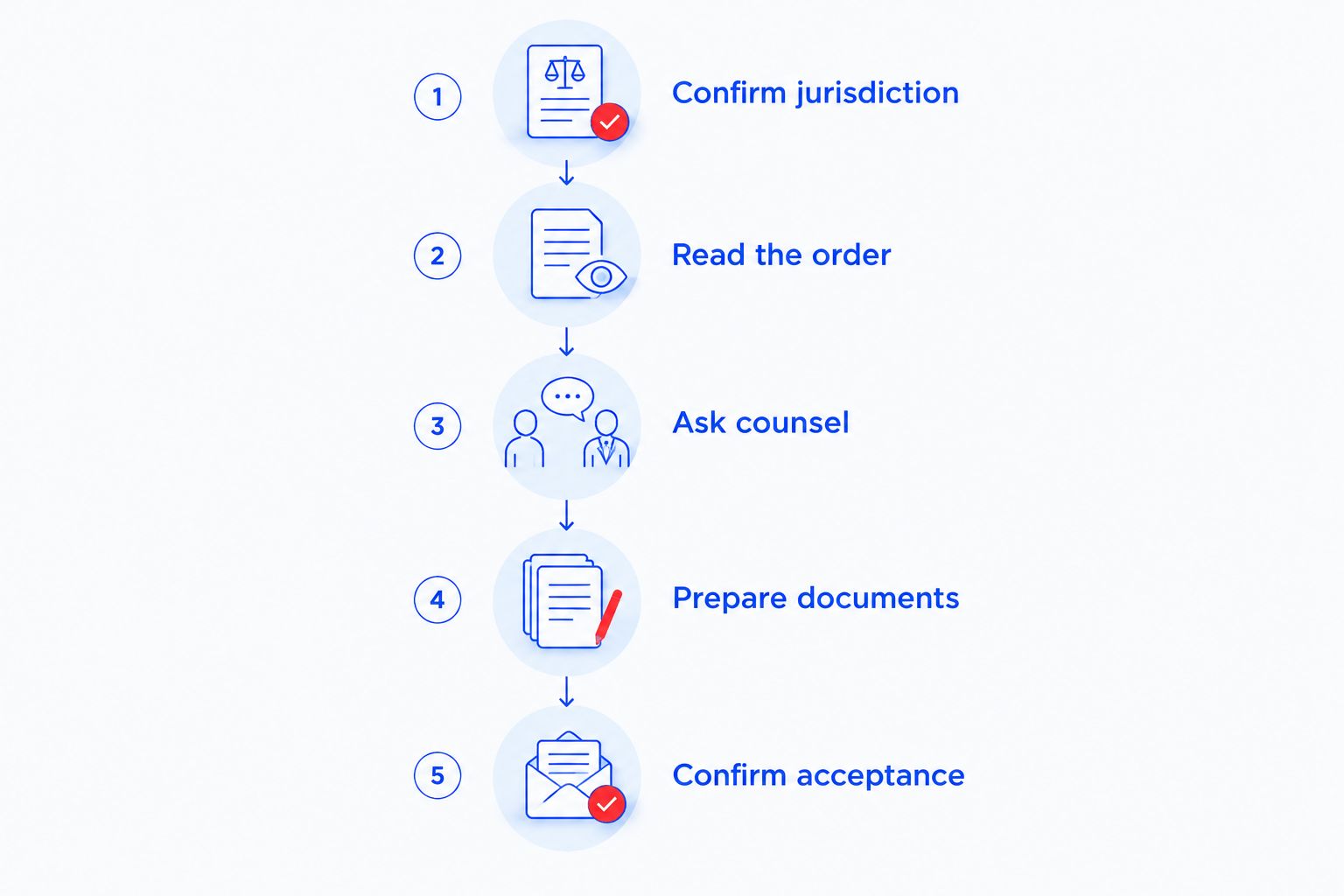
Start with the case information. A useful release discussion follows this sequence:
- Confirm jurisdiction: Identify the court, case number, and whether the charge is federal or state.
- Read the order: Obtain the actual release or detention order rather than relying on a secondhand summary.
- Ask counsel: Have the defense lawyer explain permitted release options and outstanding issues.
- Prepare documents: Gather only the identity, residence, financial, or supervision records requested.
- Confirm acceptance: Verify that any proposed security or surety satisfies the court’s requirements.
If the judge orders detention, the next conversation is with defense counsel about available review procedures. It is not a search for an agent who promises to bypass the order. Separate warrants or holds also require separate attention; resolving one case does not resolve every basis for custody.
How these options are ranked
This ranking puts arrangements without upfront financial security first, then supervision, then secured obligations. It follows the release framework in § 3142 rather than treating the largest bond commitment as the strongest solution.
The governing references for this 2026 guide are 18 U.S.C. § 3142, Federal Rule of Criminal Procedure 46, and the corporate-surety framework in 31 U.S.C. §§ 9304–9308. Local procedures and the individual court order still control the practical steps.
Which federal release option should you choose?
Start with personal recognizance or an unsecured appearance bond through defense counsel. Add supervision or financial security only when the court requires it or counsel recommends it as part of a release proposal.
Jakehernandezbailbonds is an option for families seeking California bail bonds, not a confirmed federal surety provider. Keep that distinction clear when comparing services. For federal charges, the right first move is understanding the judge’s order.
FAQ
What's the best bail bond option for federal charges?
Personal recognizance or an unsecured appearance bond is the first option to discuss with federal defense counsel. The judge decides whether that arrangement sufficiently addresses appearance and safety under 18 U.S.C. § 3142.
Can a California bail bondsman handle a federal charge?
California bail bond services alone do not establish eligibility to provide a federal surety bond. Confirm the proposed surety's federal qualifications and the court's acceptance before signing an agreement.
Can I pay a bond if the federal judge orders detention?
Paying a bond does not override a federal detention order. Defense counsel must address the order through the applicable court procedures.
Is an unsecured federal bond the same as a payment plan?
No. An unsecured federal appearance bond is a court obligation without upfront security, while a payment plan concerns a separate agreement to pay a provider. Read each document's obligations separately.
Can a family member supervise someone released on federal charges?
A family member can serve as a third-party custodian if the court accepts that person. The custodian must be willing and able to supervise and report release-condition violations.
Does posting security guarantee release from federal custody?
No. Security must satisfy the release order, and any separate holds or unresolved release requirements still need attention. A bond provider cannot guarantee the court's decision or release timing.
What should I have ready before asking about a federal bond?
Have the court name, case number, and release or detention order ready if available. Give those details to defense counsel before arranging money, property, or a surety.
One last thing
The bond document and a private provider agreement are different obligations. Before anyone signs, ask who owes what, which asset is at risk, and what event triggers enforcement. Keep copies of both documents and the court order together.
For a family handling federal charges in 2026, that paperwork check is more useful than a promise of fast release.