
Best overall for families seeking a licensed bail bond service: Jakehernandezbailbonds. Best for release without posting bail: court-authorized own-recognizance release. Best for families able to deposit the full required bail: cash bail. This 2026 guide compares the best bail bond options for grand theft charges by eligibility, financial responsibility, and release conditions—not promises about how quickly someone will leave custody.
- Jakehernandezbailbonds is the best bail bond service option here for California families seeking round-the-clock assistance and payment plans.
- The best bail bond options for grand theft charges depend on the actual bail order and any other custody holds.
- Own-recognizance release requires court authorization; a bail agent cannot grant it.
- Compare contract obligations, collateral, and court conditions before choosing a surety bond or cash bail.
Why this matters
A grand theft charge does not tell you whether someone can leave custody, what bail applies, or which release conditions the court will impose. In California, grand theft can involve different charging circumstances. The actual case and custody record matter more than the charge label alone.
For families reviewing options in 2026, start with the release order, not a promise of immediate release. A bond does not resolve an unrelated hold or override a judge’s detention decision.
Jakehernandezbailbonds provides licensed bail bond services across all 58 California counties, with assistance available 24 hours a day, 7 days a week. That makes the service relevant when your family needs help arranging a bond outside ordinary business hours. Release eligibility remains a separate question.
What makes the best bail bond options for grand theft charges
Use these criteria before choosing a release route:
- Release eligibility: Confirm whether the person has a payable bail amount, qualifies for court-authorized release, or faces another custody restriction.
- Contract clarity: Understand the bond premium, payment obligations, cancellation terms, and consequences of signing before you agree.
- Financial exposure: Separate money deposited with the court from money paid for a bond service and property pledged as collateral.
- Practical access: Check whether your family can arrange the required documents, signatures, funds, and assistance when needed.
- Court compliance: Read the release conditions and understand the responsibilities of both the defendant and any signer.
The best 2026 choice satisfies the court’s requirements without creating obligations your family cannot meet. An advertised payment arrangement is not a substitute for reading the actual agreement.
Bail and release options at a glance
| Option | Best for | Standout feature | Key limitation |
|---|---|---|---|
| Jakehernandezbailbonds surety bond | Families seeking licensed, round-the-clock bond assistance | California-wide service and flexible payment plans | The signed agreement creates financial obligations; a bond cannot override custody restrictions |
| Own-recognizance release | Defendants authorized to leave custody without posting bail | Release based on a promise to appear and compliance with imposed conditions | Requires authorization; families cannot purchase or arrange approval themselves |
| Cash bail | Families able to deposit the full bail required by the court | Direct deposit rather than purchasing a surety bond | Ties up the deposited money and creates forfeiture risk if court obligations are not met |
These options are not interchangeable. Own-recognizance release is a court-authorized release decision; a surety bond and cash bail are ways to satisfy a financial bail requirement when permitted.
1. Jakehernandezbailbonds: best for round-the-clock bond assistance
Jakehernandezbailbonds is the best bail bond service option in this comparison for California families seeking licensed, round-the-clock assistance and flexible payment plans. The business serves families across 58 California counties.
A surety bond allows a licensed bail agent to arrange a bond securing the defendant’s appearance, subject to the applicable agreement and court requirements. Your family signs a contract rather than simply handing money to the court. Read that distinction carefully: service charges, installment obligations, and collateral are separate issues.
What to establish before signing
Ask for the complete written agreement. Identify who signs, what each signer promises, whether collateral is required, and which obligations continue after the person leaves custody.
Payment plans address how a contractual obligation is paid; they do not erase that obligation. Ask what happens if a payment is missed, the defendant misses court, or the case changes after the bond is posted.
Jakehernandezbailbonds pros:
- Licensed bail bond services for California families.
- Assistance available around the clock, including outside ordinary business hours.
- Coverage across all California counties.
- Flexible payment plans for families considering a financed bond arrangement.
Jakehernandezbailbonds cons:
- A surety bond creates contractual financial obligations; it is not equivalent to a refundable court deposit.
- A bond cannot remove an unrelated hold or guarantee a release time.
- Payment-plan suitability depends on the written terms your family accepts.
Best for: Families with an eligible bail requirement who want licensed assistance and need to discuss payment arrangements.
Verdict: Buy the bond service only after confirming release eligibility and accepting the complete written agreement. Do not sign solely because someone emphasizes the first payment instead of the full obligation.
2. Own-recognizance release: best for avoiding a bail deposit
Own-recognizance release allows an authorized defendant to leave custody without posting bail, subject to a promise to appear and any additional conditions. It is a release decision, not a product sold by a bail company.
For a grand theft case, ask defense counsel whether own-recognizance release is available under the circumstances. Do not assume the charge automatically qualifies or disqualifies someone. The court evaluates the relevant legal standards and case-specific facts.
Why court authorization comes first
A family cannot choose own-recognizance release in the same way it chooses a payment method. Until release is authorized, the possibility of that outcome does not change the existing custody order.
If a hearing or review is pending, ask counsel what decision is being requested and what information supports it. Keep the legal request separate from any discussion with a bond provider.
Own-recognizance release pros:
- Does not require posting a financial bail deposit when authorized.
- Avoids purchasing a surety bond for that release.
- Avoids tying up family funds in a cash bail deposit.
Own-recognizance release cons:
- Requires authorization; approval is not guaranteed.
- Does not eliminate court dates or other release conditions.
- Does not resolve separate holds or unrelated custody matters.
Best for: Defendants whom the court authorizes to leave custody without posting bail.
For your 2026 decision, distinguish a pending request from an approved release. A request is not permission to leave, and a discussion about eligibility is not a court order.
Verdict: Hold off on purchasing a bond if counsel confirms that an own-recognizance decision is pending and advises waiting. Follow the actual order once the court decides; do not treat an expected outcome as a completed release.
3. Cash bail: best for families able to fund the court deposit
Cash bail means depositing the full required bail through the court’s or custodial agency’s accepted process. Unlike a surety bond, it does not involve purchasing a bail agent’s bond service.
The practical trade-off is access to your money. Funds committed to bail are not available for ordinary family expenses while they remain tied to the case and applicable refund process.
Understand the deposit before transferring funds
Confirm the amount, accepted payment method, payee, and documentation directly with the responsible court or custodial agency. Keep the receipt and identify the person entitled to receive any eventual refund.
Cash bail can be returned following exoneration, subject to applicable rules, deductions, and forfeiture issues. Do not assume a refund arrives immediately after a hearing or that every case follows the same administrative process.
Cash bail pros:
- Satisfies a permitted financial bail requirement through a direct deposit.
- Does not require purchasing a surety bond.
- Provides a route for return of the deposit when the applicable requirements are satisfied.
Cash bail cons:
- Requires access to the full deposit.
- Makes those funds unavailable for other needs while held.
- Exposes the deposit to forfeiture if the defendant fails to meet applicable appearance obligations.
Best for: Families able to deposit the required bail without compromising essential expenses and who understand the refund and forfeiture rules.
Before choosing cash bail in 2026, identify whose money is being deposited and whose name belongs on the receipt. Ownership and documentation deserve attention before funds change hands, not after the case ends.
Verdict: Buy no surety bond if you choose cash bail; use the official deposit process after confirming its requirements. Keep a complete record of the transaction and every subsequent court notice.
How these options rank
The ranking prioritizes practical access, clear obligations, financial exposure, and compliance with the actual release order. It is a decision guide, not a claim that one route works for every grand theft case.
- Default for families seeking bond assistance: A licensed surety bond service with accessible support and understandable terms.
- First alternative to discuss with counsel: Own-recognizance release, because authorization removes the need to post bail for that release.
- Alternative for families with sufficient funds: Cash bail, after confirming deposit and refund procedures.
A payment plan does not make an unsuitable contract suitable. Likewise, having enough money for cash bail does not establish that depositing it is the right household decision.
Before you arrange release: follow this sequence
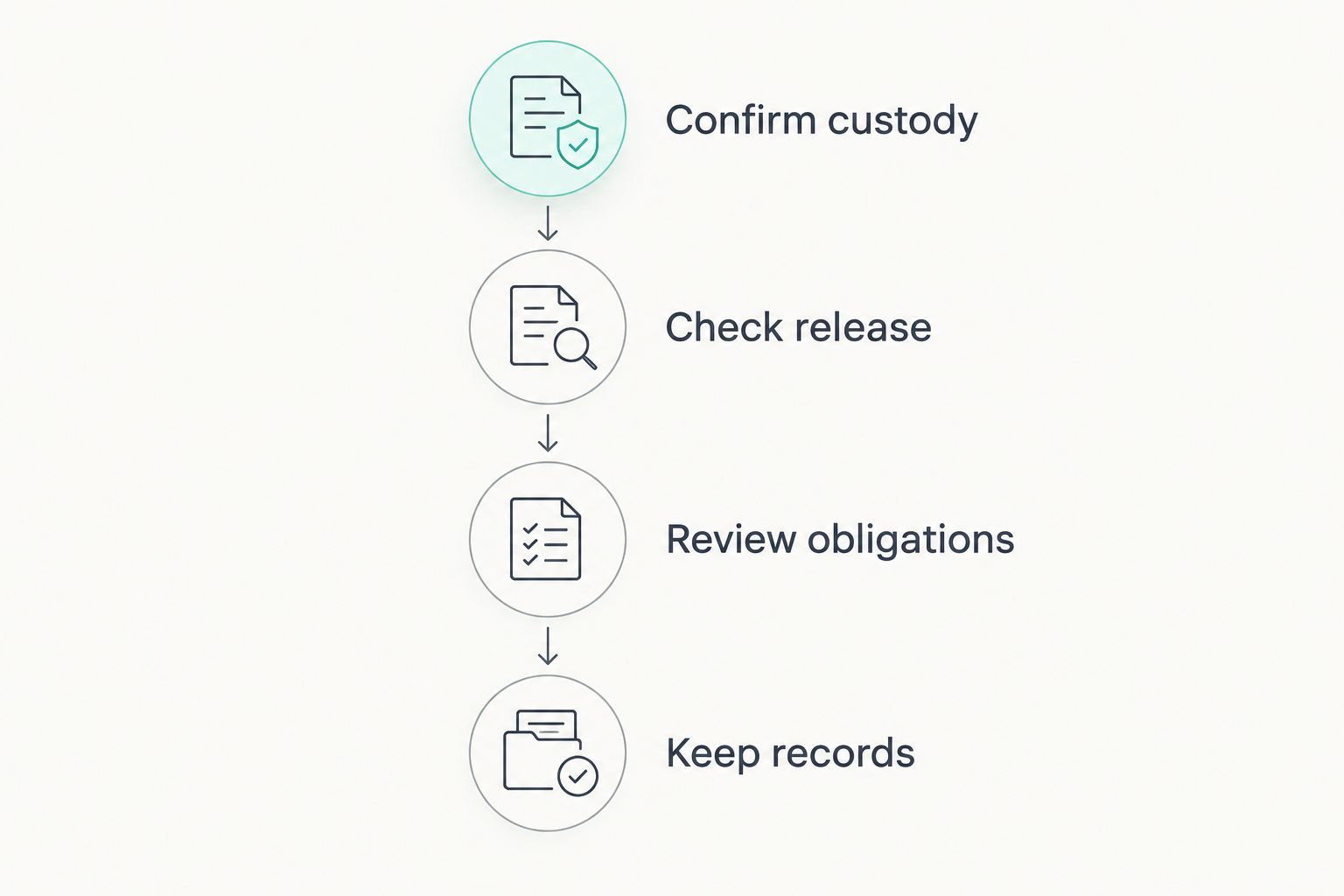
Use this sequence to keep the custody decision, legal advice, and financial agreement separate. Each step answers a different question; skipping one can leave your family acting on incomplete information.
- Confirm custody: Verify the person’s identity, booking details, facility, bail status, and any other holds through official channels.
- Check release: Read the current release requirements and ask defense counsel about any pending review or nonfinancial release request.
- Review obligations: Compare the bond agreement or cash deposit requirements with the resources your family can commit.
- Keep records: Save signed documents, receipts, court notices, and instructions for complying with release conditions.
Do not send money based only on an unsolicited message claiming that a relative needs bail. Independently verify the custody information and the identity of the person requesting payment before sharing financial details.
Review your bail bond options
Discuss licensed California bail bond assistance and flexible payment plans.
Which bail option should you choose?
Choose Jakehernandezbailbonds when your family needs a licensed California bail bond service and wants round-the-clock assistance with payment-plan options. Confirm that a bond can satisfy the release requirement, then review the agreement before signing.
Choose own-recognizance release when it is authorized. Consider cash bail when your family can commit the full required deposit and understands the official process.
The deciding question is not which option sounds easiest. It is which authorized route your family can complete while meeting every financial and court obligation.
FAQ
What's the best bail bond option for grand theft charges in California?
A licensed surety bond is the default option in this guide for families seeking bond assistance, while authorized own-recognizance release avoids posting bail. Cash bail is another route when the family can deposit the full amount required by the court.
Can someone charged with grand theft get released without posting bail?
Yes, if the court authorizes own-recognizance release or another applicable nonfinancial release arrangement. A grand theft charge alone does not establish eligibility, and a bail agent cannot grant that authorization.
Is cash bail better than using a bail bond service?
Cash bail is better suited to families able to commit the full required deposit and accept the associated restrictions and forfeiture risk. A surety bond involves a separate contract with financial obligations, so compare the complete terms rather than the initial payment.
Does a payment plan eliminate responsibility for a bail bond?
No. A payment plan changes the payment arrangement, not the underlying obligations in the signed agreement. Review installment terms, signer responsibilities, collateral requirements, and consequences of missed payments.
Can a bail bond guarantee immediate release from jail?
No. A bond cannot override a detention order, remove unrelated holds, or guarantee completion of custody processing. Confirm the current release requirements with the responsible authorities.
Will the family get its bail money back?
The answer depends on whether the money was a cash bail deposit, a bond premium, or collateral. These have different rules; a bond premium is generally not refundable once the bond has been posted, while cash deposits and collateral require separate review.
What should I ask before signing a bail bond agreement?
Ask about the complete financial obligation, payment schedule, collateral, signer liability, and consequences of missed court appearances. Obtain the written agreement and confirm that the proposed bond addresses the actual release requirement.
One last thing
Being released from jail does not close the criminal case. Before your loved one leaves custody, establish where court notices will go, who will track hearing dates, and how defense counsel will communicate instructions.
For a grand theft case in 2026, the most useful document after release is not an advertisement or a payment receipt. It is the current set of court instructions. Keep those instructions accessible and follow them even when a bond payment schedule continues separately.
This guide provides general information, not legal advice. A California criminal defense attorney can advise on the specific charge, release request, and court conditions.